Empty homes costing money
An empty house still carries insurance, bills and, in many areas, a council tax premium. Our page on selling an empty house explains the ongoing costs.

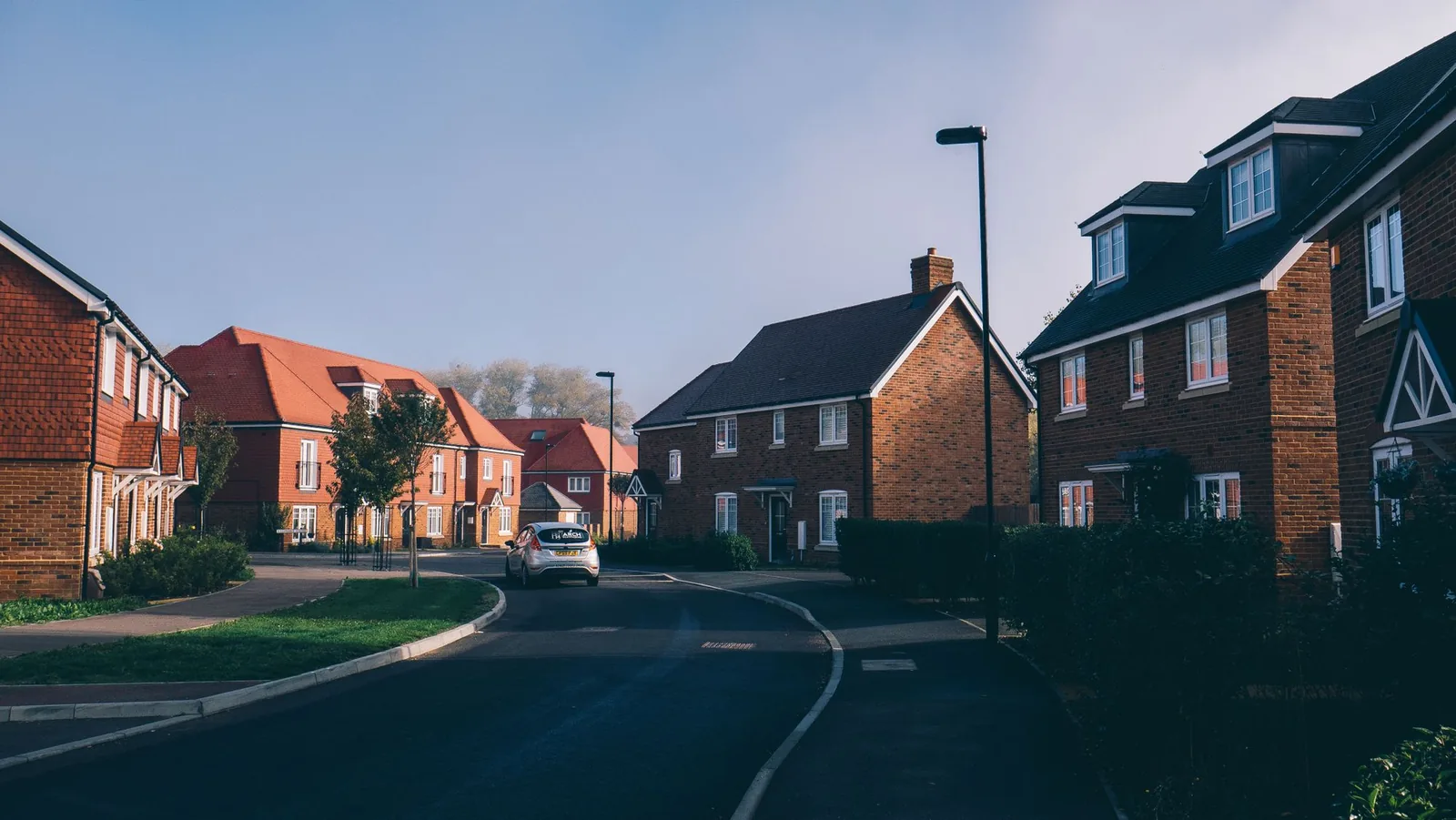
Weighing up a cash buyer vs an estate agent, or wondering whether an auction would be simpler? This guide compares the three main ways to sell a house in England on price, speed, certainty, fees and effort.

Most homes in England are sold in one of three ways. An estate agent markets the property to the public, and you choose a buyer, who usually needs a mortgage. An auction house lists the property in a sale where bidders compete, and the winning bidder is committed quickly. Or you sell straight to a company that buys property with its own money, which is what Resolute Estate Solutions does.
| Factor | Estate agent | Auction | Direct property buyer (us) |
|---|---|---|---|
| Price | Usually the highest of the three, because the home is offered to the whole market | Set by competition on the day; can be strong for unusual homes, but a reserve may not be met | Below open-market value |
| Speed | Depends on finding a buyer, their mortgage and any chain | Fixed timetable once the hammer falls on a traditional auction | Dictated by you |
| Certainty | Nobody is bound until exchange of contracts; buyers can withdraw | High on a traditional auction once the lot sells; lower if it fails to sell | Nobody is bound until exchange of contracts; the buyer can withdraw |
| Fees to the seller | Agent's commission plus your own conveyancing | Entry fee and commission, plus a legal pack and your conveyancing | With us, no fees; we pay your legal fees |
| Effort | Viewings, keeping the home presentable, chasing the chain | Legal pack up front, viewings before the sale | One viewing, the paperwork, and leaving the property empty by completion |
Every sale is different, so treat this table as a starting point rather than a verdict.
For a home in reasonable condition that a lender would happily mortgage, selling through an estate agent will usually get you a higher price than selling to a company like ours. That is the whole point of open marketing. Many buyers see the home, and the one who wants it most sets the price.
Owner-occupiers buying a home to live in are not trying to make a margin. They will often pay more for a garden they love or a school catchment than any investor would. An agent's job is to put your home in front of as many of those people as possible.
The costs of that route are real, though. There is the agent's commission, which is agreed in the contract you sign with them and is often a percentage of the sale price. There is your own conveyancing. There may be work to get the house ready for photographs. And there is the time it takes: marketing, viewings, negotiating, then waiting while the buyer's mortgage is approved and their own sale moves along.
If you have that time and the property is straightforward, an agent is very likely the right call.
The open market works well until something gets in the way. Until contracts are exchanged, nobody is legally bound, so a buyer can withdraw at any point for any reason. Sales commonly fail at the survey stage, because a buyer loses their mortgage offer, or because a sale further down the chain collapses. If that has already happened to you, our page on what to do when a house sale falls through goes into the options.
Some properties struggle to attract a mortgage lender at all. Short leases are a common reason. GOV.UK notes that lenders are typically less likely to lend where a lease has less than 80 years left, which is covered on our page about selling a short lease or leasehold flat. Homes with structural movement, fire or flood damage, no working kitchen, or non-standard construction can have the same problem, and we explain why on our page about selling a derelict or unmortgageable house.
When most buyers need a mortgage and lenders will not lend, the pool of buyers shrinks to people with their own funds. That is where auctions and direct buyers come in. Neither will pay what a perfect version of the same house would fetch, but both can buy a home that the mortgage market cannot.
Selling at auction suits some properties very well: unusual homes, plots, houses needing full renovation and anything where it is hard to agree a price in advance. Competition can push a sale price up, and on a traditional auction the buyer is committed when the hammer falls, with completion on the date set out in the auction contract.
There are two broad types. At a traditional (unconditional) auction, contracts are exchanged on the day. At a conditional auction (often called the modern method of auction), the winning bidder usually pays a reservation fee and then has a set period to exchange, which gives them more time but gives you less certainty.
Things to budget for and think about before choosing an auction:
Auction buyers are mostly investors and builders, so they are pricing in a margin just as a direct buyer does. The difference is that the price is found by competition on the day rather than agreed in advance.

A direct property buyer is a company that buys homes for its own account, using its own funds rather than a mortgage. Resolute Estate Solutions Ltd is one. We buy residential property across England. We are not estate agents, and we never hand your enquiry on to anyone else.
Set out honestly, the direct property buyer pros and cons look like this.
Our offers are below open-market value. Our page on how we work out a property offer explains how we reach our figure.
If the price matters more than anything else, a direct buyer is probably not your best option. If certainty, simplicity or the condition of the property matter more, it can be.

Once you have compared the ways to sell a house, these are situations where a direct sale can suit a seller. It is not a complete list, and none of them means you have to sell this way.
An empty house still carries insurance, bills and, in many areas, a council tax premium. Our page on selling an empty house explains the ongoing costs.
Executors often want a single, calm process with one buyer. See our page for executors selling a probate property.
Structural problems, short leases or non-standard construction can rule out most buyers who need a mortgage.
We buy rental properties with vacant possession, so the tenancy must have ended and the property be empty by completion. Our guide to selling a house with tenants covers the rules.
After one collapsed sale, some sellers value a buyer who does not depend on a lender or a chain.
A relocation or downsize can be easier to plan with one buyer and a timetable agreed with both solicitors.
If you are still unsure which route suits you, our page on the options for selling your house fast compares them for lived-in homes, and our empty house checklist covers the choices for a property nobody is living in.
Whichever buyer you choose, a few checks will protect you. They apply to us as much as to anyone else, and we would encourage you to make them.
Be wary of pressure. A deadline on an offer, a timer on a website or repeated calls urging you to sign today are warning signs. You should be able to take your time, talk to family and say no without cost. Our page on the identity and fraud checks we carry out explains what we ask of you in return, and why.
In England, a seller must give a valid Energy Performance Certificate free of charge to prospective buyers when a building is to be sold and make sure the eventual buyer receives one. That duty is set out in regulation 6 of the Energy Performance of Buildings Regulations 2012, and it applies to a private sale to a company buyer as well as to an open-market sale. Our step-by-step selling process covers when the EPC and other papers come in.
You will also need to complete the property information forms your solicitor sends you, such as the TA6, and answer enquiries from the buyer's solicitor.
Every route ends the same way on completion day: the money moves, ownership passes and the keys change hands. If you live in the property, you will need to leave it empty by completion, whoever the buyer is.
Think about the contents, too. An agent's buyer will expect the house cleared unless you agree otherwise, and so will an auction buyer in most cases.

If you are still weighing up a cash buyer vs an estate agent vs an auction, three questions usually settle it.
Could a buyer get a mortgage on the property? If yes, and nothing else is pressing, start with an estate agent. You are likely to achieve more money. If no, the choice is really between an auction and a direct buyer.
How much does certainty matter compared with price? If a failed sale would cause real problems, for example for executors with an empty house or a seller with a move already arranged, a known buyer with its own funds may be worth the lower price.
How much work can you take on? Clearing, repairing, hosting viewings and chasing a chain take time and energy. Some sellers are glad to do it. Others, living far away or managing a relative's affairs, would rather not.
You can also explore more than one route at once. It is perfectly reasonable to get a market appraisal from a local agent and a written offer from us, then compare them. Nothing we send you commits you to anything, and you can decline our offer at no cost. If you would like to see a figure, you can ask us for a written offer on your property or call 0203 746 5656 to talk it through first.
On the price you receive, a direct buyer usually pays less than an estate agent would achieve, because offers are below open-market value. The gap narrows once you take off the agent's commission and your legal costs, which we pay when you sell to us. It is worth comparing the amount you would actually receive, not just the headline figures.
Both avoid waiting for a mortgage. A traditional auction fixes the timetable in the auction contract, but you have to wait for a suitable auction date and prepare a legal pack first. With a direct buyer, the timetable is set mostly by the two solicitors and the searches. We agree it with you and your solicitor rather than setting a deadline.
No. There are no fees, we pay your legal fees, and nothing is deducted from the price in our written offer.
Yes. You are welcome to compare our written offer with an agent's market appraisal before deciding. There is no obligation, and saying no costs you nothing.
Check it on Companies House, insist on a written offer, never pay upfront fees and ask who will actually own the property at completion. Be wary of deadlines or pressure to sign quickly.
Sometimes. Competition on the day can push the price up, particularly for unusual homes. But auction fees and the legal pack cost money whether or not the lot sells, and an unsold lot leaves you back at the start.
Page last reviewed on by the Resolute Estate Solutions team.
Want a written figure to compare with an agent's appraisal?
Tell us about the property and we will come back to you with a written offer. There are no fees and no obligation.